













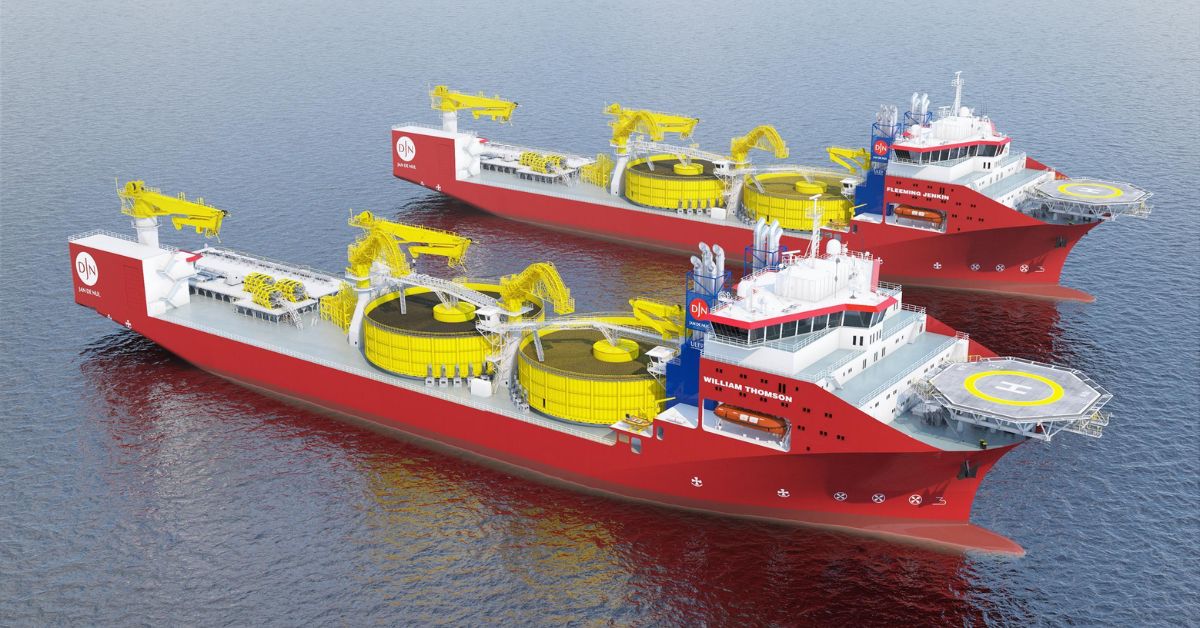
Jan De Nul has launched another next level high-performance vessel: the William Thomson, one of two identical subsea cable‑laying vessels currently under construction. Both vessels have a cargo capacity of 28,000 tonnes and a length of 215 metres. This makes them the largest of their kind.
Subsea cables are needed to bring energy generated at sea ashore and to connect the electricity grids between different countries and regions. This is essential for building a reliable energy network based on renewable sources, enabling electricity to flow easily from areas of surplus to areas of shortage.
Laying cables at depths of up to 4,000 metres
Jan De Nul’s two new cable-laying vessels have been specially built to install these cables, both in shallow and ultra-deep waters down to 4,000 metres. Thanks to their large loading capacity, they can take longer cables on board in a single piece and bridge longer distances with as few subsea cable connections as possible. Compared to other
Content Original Link:
" target="_blank">